|
Overview
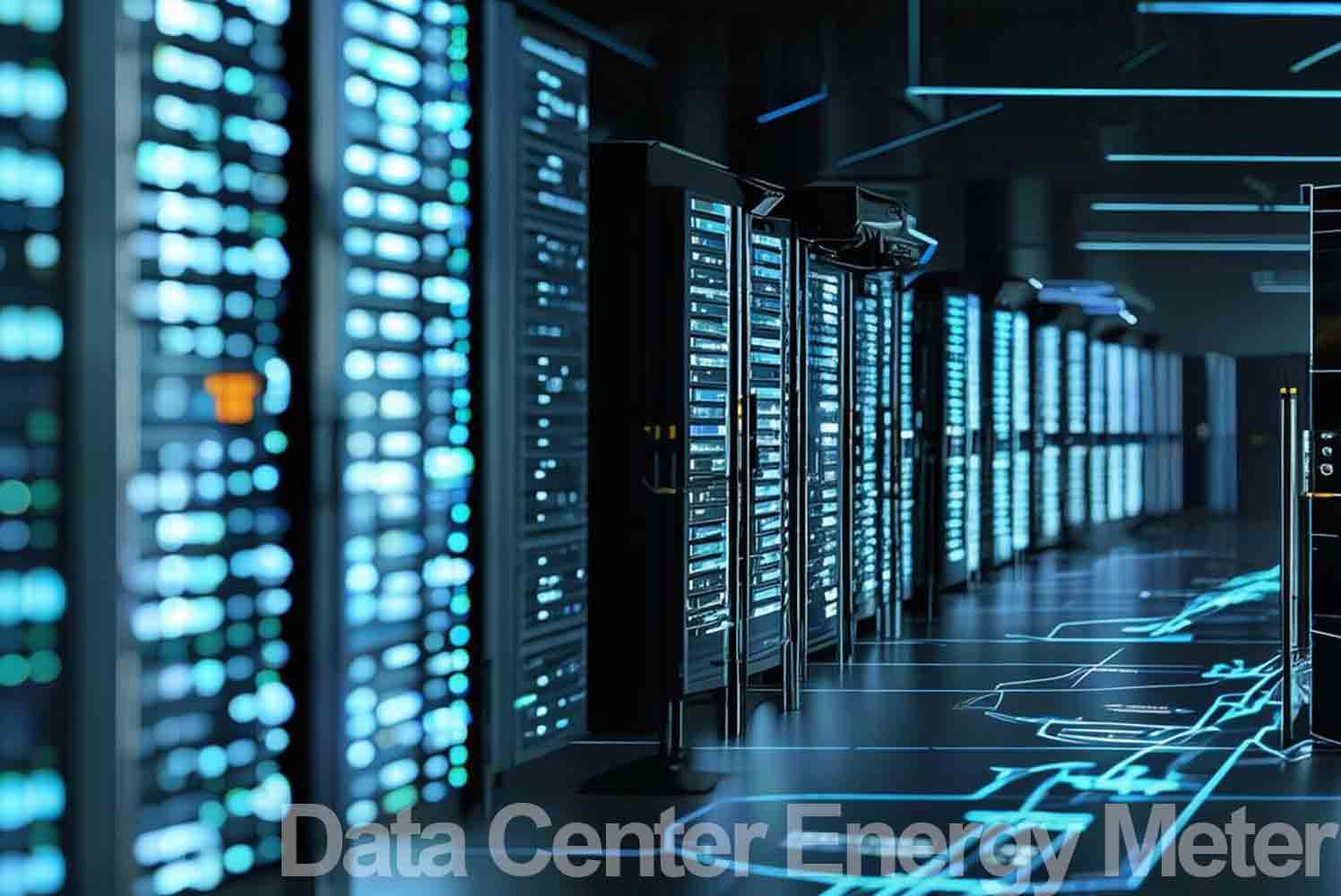
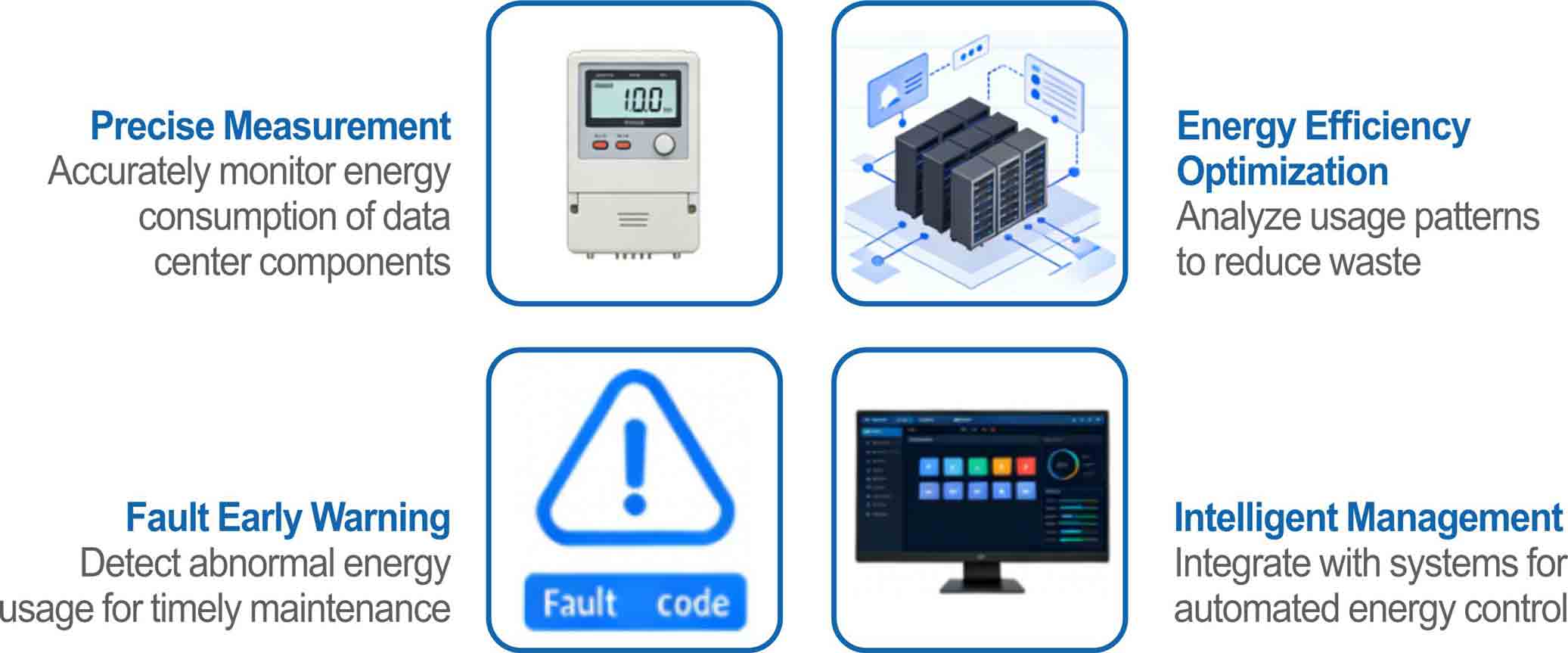
In data centers, energy meters serve as core equipment for achieving refined energy consumption management, improving operational efficiency, and ensuring system stability. Their applications primarily revolve around four dimensions: precise measurement, energy efficiency optimization, fault early warning, and intelligent management.
1. Main Application Scenarios
1.1 Multi-Circuit Centralized Monitoring
Data center power distribution systems are complex, with numerous circuits for cabinets, UPS, air conditioning, and other equipment. Traditional single-circuit meters require extensive deployment, occupying significant space and incurring high costs. Multi-circuit smart meters integrate monitoring for up to 8 three-phase loads, enabling real-time collection of current, voltage, power, energy consumption, and temperature data. This drastically reduces the number of devices, simplifies installation, and lowers construction costs.
1.2 Five-Tier Energy Metering System
To achieve full-link energy consumption visibility from the main incoming line to terminal equipment, data centers widely adopt a five-tier metering scheme:
-
Tier 1 Metering: Measures total input energy at the mains incoming cabinet or transformer low-voltage side.
-
Tier 2 Metering: Distinguishes between production and non-production electricity use (e.g., lighting, office equipment, fire protection).
-
Tier 3 Metering: Measures total power consumption of communication equipment at the UPS or switch power supply output side.
-
Tier 4 Metering: Separately measures IT load and air conditioning energy consumption at the input ends of cabinet PDUs (Power Distribution Units) and air conditioning distribution boxes.
-
Tier 5 Metering: Accurately measures energy consumption of individual cabinets or specialized equipment at the output end of cabinet PDUs, enabling "cabinet-level" energy visibility.
1.3 Energy Efficiency Management and Optimization
High-precision energy meters not only measure energy consumption but also analyze parameters such as power factor, harmonics, and power quality. Through long-term data accumulation, managers can identify high-energy-consuming devices, detect abnormal usage (e.g., a server’s energy consumption surging by 20%), optimize equipment operation strategies, adjust cooling solutions, significantly reduce PUE (Power Usage Effectiveness), and achieve cost savings and efficiency improvements.
1.4 Intelligent Operation and Maintenance & Safety Early Warning
Smart meters feature real-time alarm functions for overvoltage, undervoltage, overtemperature, leakage, and other anomalies. Leveraging IoT technology, data is uploaded to an energy consumption management cloud platform for remote monitoring and centralized management. In case of faults, the system quickly locates problematic circuits, drastically reducing fault排查 time and enhancing data center reliability and safety.
1.5 Support for Energy Audits and Compliance
Accurate energy data is the foundation for enterprises to conduct energy audits and meet green low-carbon policy requirements (e.g., industrial energy efficiency improvement targets). High-precision energy meters provide authoritative measurement data, facilitating carbon emission accounting and fulfilling ESG (Environmental, Social, and Governance) responsibilities.
|